
Whether you’re tackling a weekend renovation or managing projects day after day, the tools you choose can directly impact efficiency, productivity, and overall project outcomes. Durable tools are often viewed as a long-term investment, but durability alone isn’t the only factor worth considering. The most effective remodeling tools combine strength, reliability, and versatility, allowing users to accomplish more with fewer tools on hand.
When selecting tools for remodeling and demolition projects, understanding what makes a tool both durable and adaptable can help you build a toolkit that is ready for a wide range of challenges.
Why Durability and Versatility Matter in Remodeling
Remodeling projects place significant demands on tools. From removing flooring and trim to lifting, prying, scraping, and demolition work, tools are frequently exposed to heavy loads, repeated impact, and challenging jobsite conditions. That’s why the most valuable tools combine two essential qualities: durability and versatility.
Durability ensures a tool can withstand repeated use and continue performing when it matters most. Versatility ensures that the tool can tackle multiple tasks efficiently, reducing the need for additional equipment and keeping projects moving forward.
Together, these qualities offer several advantages:
- Consistent performance over time
- Reduced risk of tool failure during critical tasks
- Lower replacement costs
- Improved efficiency across a variety of applications
- Fewer tool changes and interruptions during projects
- Greater confidence when tackling demanding jobs
When evaluating remodeling tools, look for features such as hardened steel construction, reinforced designs, corrosion-resistant finishes, ergonomic grips, and multi-functional capabilities. The right tool should not only last through tough projects; it should earn its place in your toolkit by helping you accomplish more with less.
Key Features to Look for in Durable Remodeling Tools
When building or upgrading your toolkit, prioritize tools that combine rugged construction with thoughtful design features.
Multi-Function Capabilities
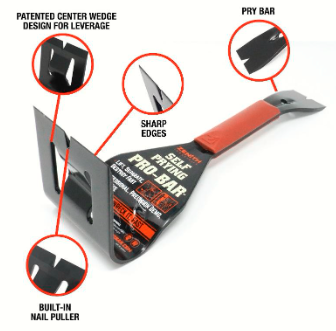
Look for tools that can handle multiple applications. For example, some pry and removal tools can serve as demolition tools, lifting tools, nail pullers, and alignment aids, reducing the need to carry several specialized tools.
The ability to perform multiple tasks with one tool can significantly improve workflow, especially during renovation projects where conditions frequently change.
Enhanced Leverage
Leverage is one of the most important factors in demolition and remodeling work. Tools designed with a steel core, optimized geometry, or self-prying features help maximize lifting power while reducing physical effort. This can be especially valuable when removing flooring, trim, molding, fasteners, or other stubborn materials.
Ergonomic Design
Long hours on a project can take a toll on hands, wrists, and shoulders. Comfortable grips, shock-absorbing handles, and designs that reduce strain can help improve control and reduce fatigue throughout the workday.
Compact Access
Not every project provides ample working space. Compact tools
Common Remodeling Tasks That Benefit from Versatile Tools
Trim and Molding Removal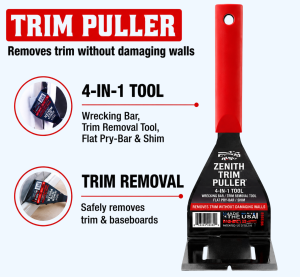
Removing trim without damaging surrounding surfaces often requires a combination of precision and leverage. Purpose-built
trim removal tools can help create separation between trim and walls while distributing force more evenly to minimize damage.
Tools with beveled edges and broad contact surfaces can provide added control during removal.
Flooring Demolition
Flooring removal often involves lifting, prying, scraping, and breaking stubborn adhesive bonds. Dedicated flooring tools designed to maximize leveragecan help reduce effort while increasing productivity.
Shock-absorbing grips and durable steel construction can make a significant difference during large flooring projects.
Nail and Fastener Removal
Fasteners are present throughout nearly every remodeling project. Having tools that incorporate nail-pulling functionality can help simplify demolition and cleanup while reducing the time spent on site.
Building a Smarter Toolkit
The best remodeling toolkit is not necessarily the largest; it’s the most capable.
Instead of focusing solely on adding more tools, prioritize tools that deliver multiple functions, withstand demanding conditions, and help you work more efficiently. Durable, versatile tools can improve project outcomes while helping reduce downtime, fatigue, and unnecessary equipment costs.
As projects become more complex and timelines become tighter, choosing tools that are built to perform across a variety of tasks can provide a meaningful advantage.
Remodeling Tool Selection Checklist
Before purchasing your next remodeling tool, ask yourself:
- Is it constructed from durable materials designed for repeated use?
- Can it perform multiple functions or replace other tools in my toolkit?
- Does it provide adequate leverage for demanding tasks?
- Is it comfortable to use for extended periods?
- Will it help improve efficiency on future projects?
- Can it access tight or hard-to-reach spaces?
- Is it designed to reduce strain while increasing productivity?
If you can confidently check most of these boxes, you’re likely investing in a tool that will continue delivering value project after project.
Frequently Asked Questions About Durable Remodeling Tools
What makes a remodeling tool durable?
Durable remodeling tools are built with strong materials such as hardened steel, reinforced construction, and ergonomic designs that allow them to withstand repeated use during demolition and renovation projects.
Why is versatility important when choosing remodeling tools?
Versatile remodeling tools allow users to complete multiple tasks with fewer tools. A multi-purpose tool can help with demolition, lifting, scraping, prying, and fastener removal, improving efficiency and reducing project downtime.
What features should I look for in a remodeling tool?
When choosing a remodeling tool, look for:
- Durable steel construction
- Comfortable grip design
- Strong leverage
- Multi-function capability
- Compact access for tight spaces
Are versatile remodeling tools better than single-purpose tools?
Versatile tools can be more efficient because they reduce the number of tools needed for a project. They are especially useful for DIY renovations and remodeling projects where multiple tasks are required.
What tools are commonly used for home remodeling projects?
Common remodeling tools include:
- Pry bars
- Trim removal tools
- Flooring removal tools
- Nail pullers
- Scrapers
- Demolition tools
Note from Zenith
At Zenith, we believe durability and versatility are what separate a good tool from a great one. Durability ensures a tool can withstand the demands of remodeling work, while versatility ensures it earns its place in your toolkit by helping you accomplish more with fewer tools. When these qualities come together, professionals and DIYers alike can work smarter, move projects forward more efficiently, and tackle a wider range of challenges with confidence. That’s the philosophy behind every Zenith tool, delivering the performance, reliability, and efficiency needed to keep projects moving.